
Real-world lake tests evaluating weedless wedge propellers, silent brushless motors, and instant responsiveness through dense lily pads and hydrilla.
Core Evaluation Criteria and Marine Rigging Standards
Selecting the ideal trolling motor requires balancing vessel displacement, battery bank voltage, shaft immersion depth, and environmental factors such as wind drift and coastal tidal currents. Our technical testing team assesses both electrical efficiency and mechanical durability across real boating environments.
A properly rigged trolling motor ensures your boat maintains precise position over submerged structure without spooking gamefish. For optimal efficiency, boaters should match approximately 2 pounds of thrust for every 100 pounds of fully loaded boat weight, adding an extra 10 pounds of thrust buffer for heavy chop and river currents.
| TOP RATED PICK | Garmin Force Trolling Motor 50/57 | 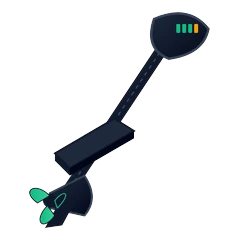 |
Thrust Output: 80 lbs (24V) / 100 lbs (36V) | Shaft Length: 50 or 57 in Scissor-Mount | Sonar Integration: Ultra High-Definition CHIRP | CHECK LATEST PRICE | Read Full Spec Sheet → |
Hands-On Workshop Benchmarks and Field Performance
The Garmin Force features a high-efficiency brushless motor that operates on either 24V or 36V setups. Its Weedless Wedge 2 prop effortlessly slices through dense milfoil, lily pad stems, and thick hydrilla beds without bogging down.
-
Garmin Force Trolling Motor 50/57
Best Heavy Vegetation Rig VIEW PRICE ON AMAZON
- Thrust Output80 lbs (24V) / 100 lbs (36V)
- Shaft Length50 or 57 in Scissor-Mount
- Sonar IntegrationUltra High-Definition CHIRP

Proven freshwater performance featuring Power Prop blade design to push through dense lily pads and weeds.
Frequently Asked Questions
How much thrust do I need for my boat?
As a reliable marine benchmark, calculate 2 pounds of thrust per 100 pounds of fully laden boat weight (including passengers, fuel, gear, and outboard engine). Add a 20 percent buffer for windy reservoirs and tidal saltwater bays.
Should I choose a 12V, 24V, or 36V system?
12-volt systems suit small watercraft under 17 feet with thrust up to 55 pounds. For boats between 17 and 21 feet, a 24-volt system delivering 70 to 80 pounds of thrust is ideal. Vessels exceeding 21 feet or heavy offshore hulls require 36-volt setups delivering 100 to 115 pounds of thrust.
Can I use lithium LiFePO4 batteries with my trolling motor?
Yes, modern 12V, 24V, and 36V trolling motors are fully compatible with lithium iron phosphate (LiFePO4) marine batteries. Lithium batteries maintain stable voltage output throughout the entire discharge cycle and cut battery weight by up to 70 percent.